How to Choose Starting Seed for a Pastel Zinnia Project
Choosing seed is not only shopping. It is the first selection decision. That is easy to forget when seed catalogs are full of beautiful photographs. A packet can look like the dream before a single plant has grown. The color may look perfect. The bloom may look full. The description may sound exactly like the flower you have been hoping to find.
But a photograph is not a population. A seed packet is a beginning, not a finished garden. If you want to start a pastel zinnia project, the most useful question is not, Which packet looks prettiest?
The better question is, Which starting seed gives me something worth selecting from?
Before choosing seed, name the project.
Not vaguely.
Clearly.
Are you trying to grow large, romantic, dahlia-like pastel zinnias? Rounded antique pompon flowers? Soft scabiosa-centered blooms? Better cut-flower stems? Softer colors? Plants that survive heat, humidity, and late-season disease pressure? Weird and beautiful surprises worth saving separately?
Each goal asks for a different starting point.
If your dream is large, soft, romantic pastel blooms, you need seed that can give you size, fullness, and quiet color. If your dream is rounded antique pompon form, you need seed that can give you smaller, rounder, fuller flowers with muted tones. If your dream is scabiosa-style centers, you need starting material that has raised centers or at least enough form variation to make those centers possible.
A pastel zinnia project becomes confusing when the gardener wants everything at once.
Of course, those things would be wonderful together. But in the first year, one trait has to lead.
Ask this before buying seed:
What trait can this project not afford to lose?
That answer should guide the packet.
Zinnias are generous, but they are not magic.
If you want soft pastel flowers and begin with a bright carnival mix, you may still find something useful. Zinnias can surprise you. But you may also spend several seasons selecting away from orange, red, magenta, and harsh yellow before the project feels close to what you wanted.
If you want tall cutting stems and begin with a compact bedding type, you may learn something, but the project may frustrate you quickly.
If you want rounded, romantic blooms and begin with mostly singles, you may get variation, but you may also spend a long time trying to build fullness from a weak starting point.
Starting seed does not need to finish the project for you. It only needs to point in the right direction. A better starting seed gives the gardener a population with the right kinds of possibilities.
Many gardeners buy seed because the variety looks unusual. That is understandable. Unusual flowers are exciting. A strange center, a soft bicolor, a faded antique tone, or an unexpected edge can make a packet feel irresistible.
But novelty is not the same as direction. A flower can be unusual and still be wrong for the project. It may be too short, too bright, too weak, too inconsistent, or too far from the main goal. If the plant does not help the project move forward, it may belong in a side trial rather than the main selection bed.
This is especially important for Fiora Lab-style pastel work. The dream is not simply “interesting zinnias.” The dream is softer, more romantic, florist-style zinnias that can sit beside dahlias, roses, lisianthus, cosmos, and heirloom chrysanthemums without shouting over them.
That means the starting seed should support softness, form, stem usefulness, and selection potential. A packet can be beautiful and still not belong in the main line.
Not all zinnia seed behaves the same way.
Before planting, know what kind of material you are working with.
It may be:
A finished commercial variety should behave within a narrower expected range, though even commercial seed is not always perfectly uniform. A mix may intentionally contain many colors and forms. A hybrid may not reproduce predictably from saved seed. Open-pollinated seed may give useful variation. Saved seed carries the choices and pollen history of a previous garden. Early-generation selection seed is still moving and should be expected to vary.
This matters because expectation changes how you judge the row. If you plant a uniform commercial variety, you may be looking for the few plants that differ in a useful way.
If you plant an open-pollinated or early-generation population, you are expecting variation and selecting from it. If you plant a bright mix and hope for pastels, you should be honest that the first season may be more exploration than refinement.
The seed type does not make the project good or bad.
It tells you how to read the results.
In the first year, do not try to select for everything equally.
Choose one priority.
For a pastel zinnia project, the priority may be:
Instead of thinking only by variety name, think by role.
A pastel zinnia project may need several kinds of starting influence:
Cream, white, ivory, pale yellow, or soft neutral flowers can help anchor the project.
Soft salmon, peach, apricot, or blush tones can move the project toward romantic color.
Buff, oatmeal, bronze, dusty rose, or muted apricot tones can add complexity.
Dahlia-like, pompon-like, cactus-like, or scabiosa-centered forms can support different project directions.
Tall cutting types may help if the goal includes bouquets.
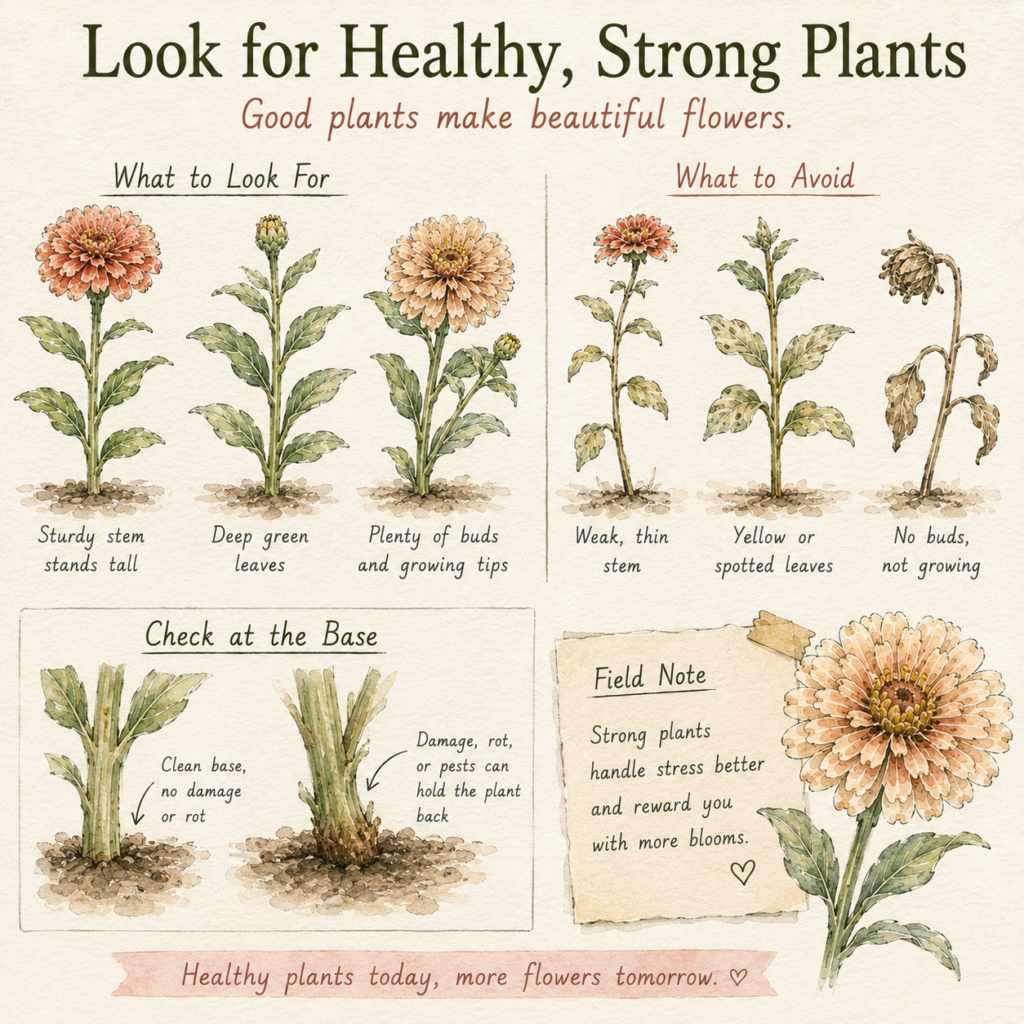
Plants that keep growing under heat, humidity, disease pressure, or late-season stress may be worth including, even if the flower is not the dream yet.
This role-based thinking keeps you from collecting too many packets just because they all look pretty. It also helps when a specific variety is unavailable.
If one seed is sold out, ask what role it was supposed to play. Then choose a substitute by role, not by panic.
Seed shopping can make a project too large before the season even begins. One packet becomes five. Five becomes ten. Suddenly, the garden has more seed than space, more goals than attention, and more possibilities than the gardener can actually observe.
A serious hobby project does not need every possible starting point. It needs enough plants to show variation and a gardener who can watch them carefully. A small, clear project is better than a large, chaotic one.
Ten plants can teach you something. Twenty-five gives more comparison. Fifty gives more choices. One hundred creates a stronger selection population. But the right number is still the number you can actually observe.
If you cannot mark, photograph, compare, and save intentionally, the planting is too large for the purpose. The best first seed is not the rarest seed. It is the seed you can grow, evaluate, and learn from.
A perfect packet does not exist. Even the best starting seed will have limitations. A pastel mix may have weak stems. A large-flowered type may mildew. A strong cutting type may include colors that are too bright. A soft color may appear on a plant that is short, floppy, or unproductive. A beautiful bloom may not make much seed. A rare line may be expensive, limited, or difficult to source again.
That is normal.
The job of starting seed is not to solve every problem.
The job of starting seed is to give you a useful population to begin selecting from.
A hobby gardener does not need perfection in Year One.
A hobby gardener needs direction.
Some seed belongs in the main project. Some seed belongs in a side trial. This is an important distinction.
If your main project is soft pastel dahlia-like zinnias, then bright mixes, unusual forms, scabiosa centers, cactus types, or performance lines may be interesting — but they may not belong in the same main seed-saving envelope.
That does not mean you cannot grow them. It means you should label them clearly. A side project can teach you something without confusing the main line.
For example:
The mistake is not growing interesting plants. The mistake is mixing everything together before you know what each plant contributes.
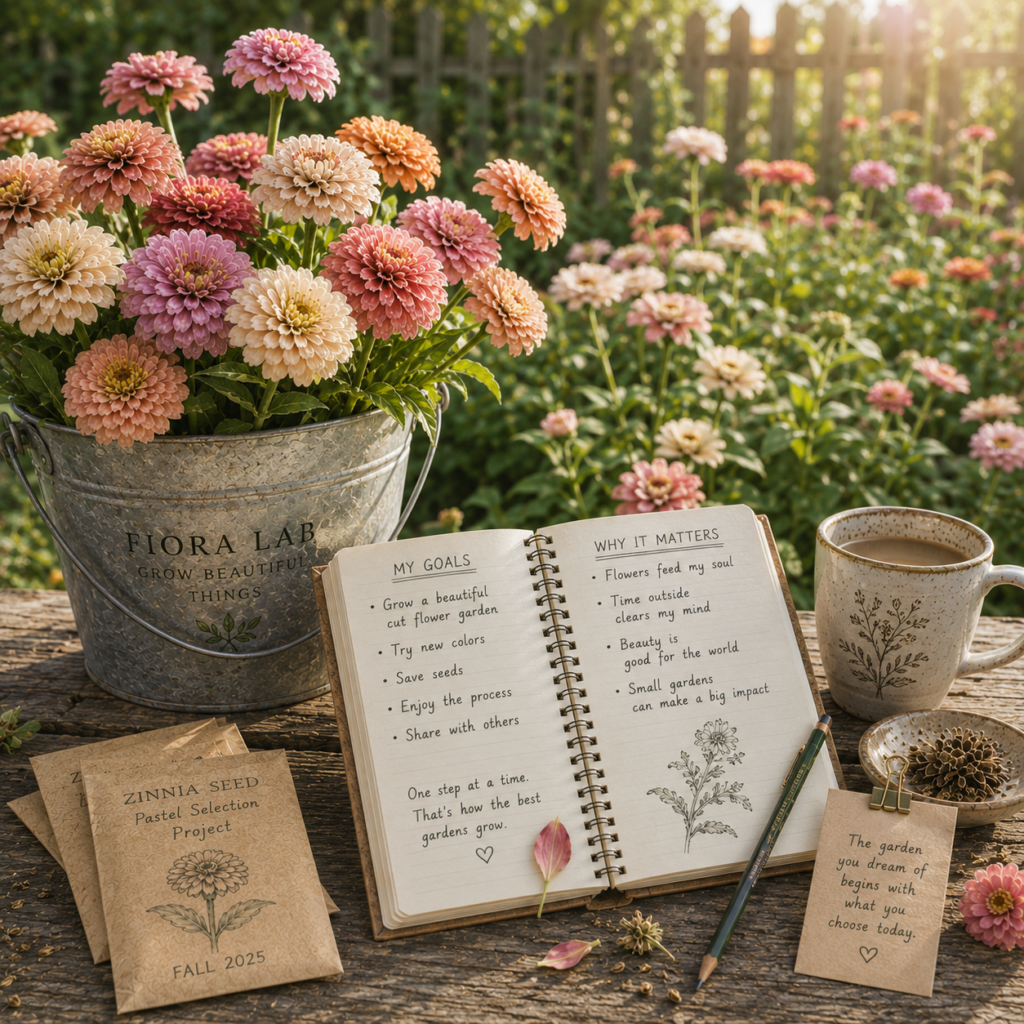
A seed may be beautiful in someone else’s field and still struggle in your backyard. Your garden has its own conditions: heat, humidity, rainfall, spacing, soil, pests, disease pressure, watering habits, and the amount of attention you can give during the season.
This is why the first year is a trial. Do not assume the packet photo tells the whole truth. Grow the plants and let your own garden answer.
Your garden is not only a display space.
It is a testing ground.
These questions can save a season of confusion.
The best starting seed is not always the most expensive seed. It is not always the rarest seed. It is not always the seed with the prettiest picture. The best starting seed is the seed that gives your project something worth selecting from.
If your dream is soft pastel zinnias, start as close to softness as you can. If your dream is fuller blooms, include material with form. If your dream is cut-flower usefulness, do not ignore stems. If your dream is August survival, pay attention to the plants that keep going when the easy part of the season is over.
Choosing seed is the first act of selection. Before the row exists, before the first bloom opens, before the first seed head dries, you are already choosing the future population.
Choose with the project in mind.
Fiora Lab zinnia seed packets are early-generation selection populations, not finished uniform varieties. They are meant for gardeners who want to grow, observe, mark, save, and continue selecting season by season.
Start with a direction. Grow enough plants to see variation. Save only from plants that move the project forward.