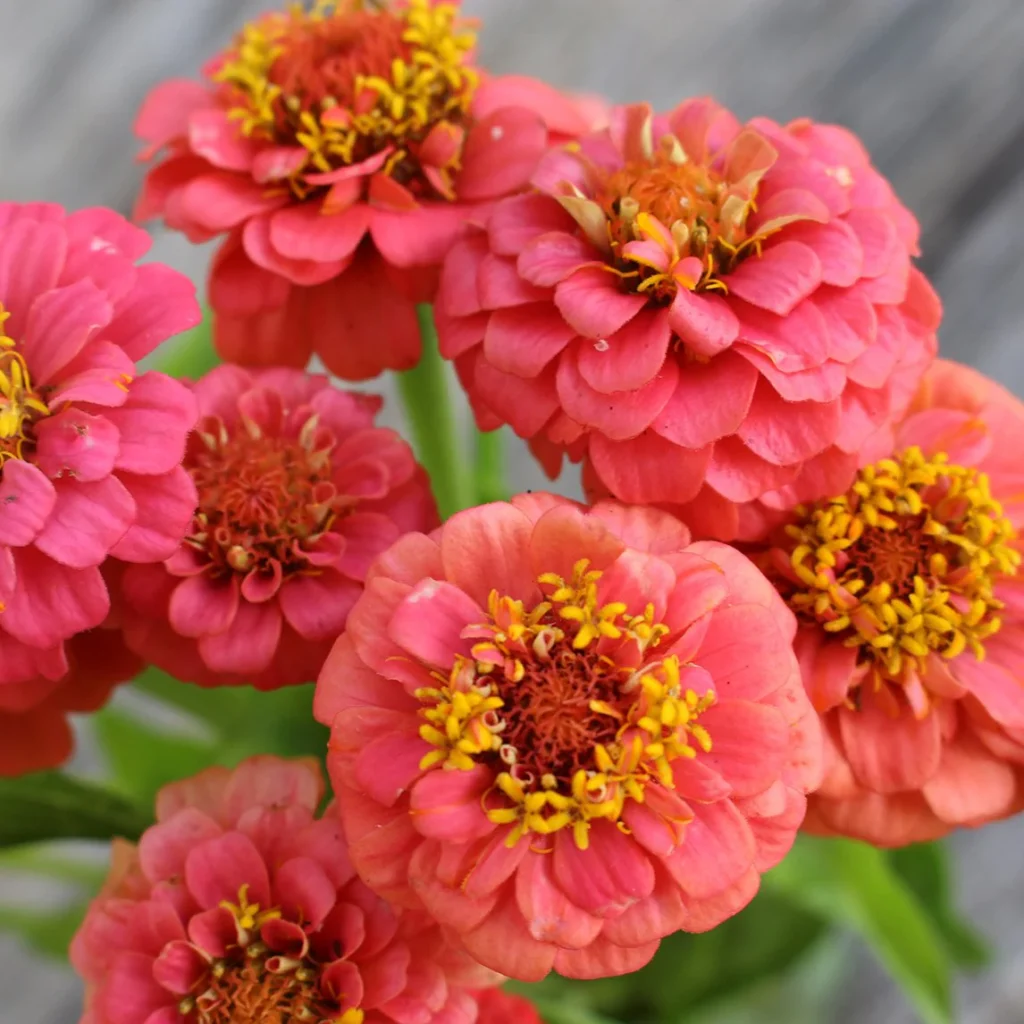
Every Fiora Lab project needs a clear selection question. For Heirloom Scabiosa, the question is: Does this flower have a center worth building around? That is the gatekeeper.
A cream zinnia with no raised center may be beautiful, but it does not define this line. A pale peach double may be useful in another project, but not here. A large romantic bloom may be gorgeous, but if it lacks the scabiosa-style center, it belongs somewhere else.
A smaller, imperfect flower with a clear cushion center may be more valuable than a larger, prettier bloom that has no texture. That is the discipline of a center-first project.
Beauty can distract you. Pastel color can distract you. Fullness can distract you.
But if the center is missing, the flower should not go into the main Heirloom Scabiosa line.
The ideal Heirloom Scabiosa zinnia has several traits working together: Raised or tufted center. Cushion-like or pincushion texture. Outer petals that frame the center. Soft heirloom-inspired color. Usable stems. Repeat bloom. Decent foliage. Enough vigor to keep producing. This is the dream, but it may not appear all at once.
In Year One, the center itself may be rare enough that you save almost any truly promising raised-center plant. In Year Two, the standard should become higher. Does the center repeat? Does the plant make more than one special flower? Does the seed family produce more raised centers? In Year Three, the best plants should combine center quality, soft color, usable stems, repeat bloom, and acceptable health. Texture begins the project. The whole plant has to carry it forward.
A good center should look deliberate. It may be raised, domed, tufted, crested, pincushion-like, cushion-like, or softly ruffled. It should add texture to the bloom without making the flower look damaged.
Some centers are strong and obvious. Others are subtle but promising. A weak center may appear as a small raised area that does not fully develop. A poor center may look messy, malformed, or unattractive. The difference matters.
When evaluating a possible keeper, look at the center from the front and the side. From the front, ask: Does the center create the feeling I want? Does it look charming, textured, and intentional? Does it make the flower more interesting? From the side, ask: Does the center have real height? Does it rise above the outer petals? Does it look structured, or only slightly uneven?
A center that looks raised from only one angle may not be as strong as it first seemed.
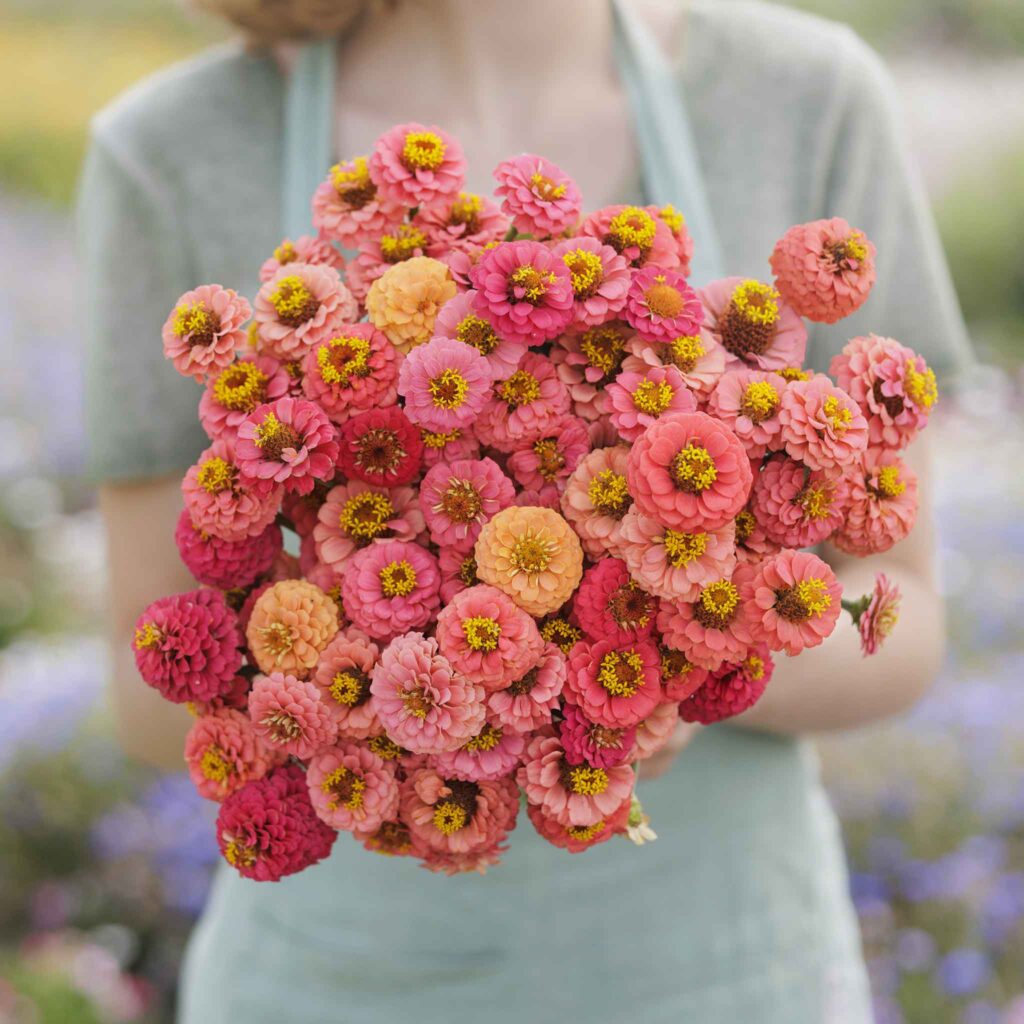
Scabiosa-type zinnias need balance.
If the flower is too open and sparse, the center can look lonely. If the bloom is too full, the center may be hidden or overwhelmed.
The best candidates have enough outer petals to make the flower feel complete while still allowing the raised center to remain the feature.
This is why ordinary double blooms can be tempting but dangerous in this project.
A fully double flower may be beautiful, but if it has no raised center, it pulls the project away from its identity. A semi-double bloom with a strong cushion center may be more valuable than a fuller bloom that loses the scabiosa character. Do not select only for more petals. Select for the right architecture. The outer petals should frame the center. They should not erase it.
The color world for this project should feel soft, old-fashioned, and usable. Think cream, pale peach, warm apricot, blush, champagne, ivory, oatmeal, muted pink, old rose, dusty rose, soft coral, and gentle heirloom tones. The goal is not loud novelty. The goal is charm.
Scabiosa-type flowers already have visual interest. They do not need harsh color to become special. Often, quieter colors make the texture more visible. A cream raised-center bloom can be very useful in arrangements because it adds texture without competing with larger flowers. Pale peach and warm apricot can be beautiful when they stay soft. Blush and muted pink can feel romantic if they avoid hot, neon, or bubblegum tones. Champagne, ivory, oatmeal, and buff can become elegant if the flower still feels alive.
A deeper antique rose or muted coral may be useful if the center is excellent and the color still belongs to the softer world.
But harsh orange, bright yellow, neon magenta, strong red, and hard bicolor patterns usually do not belong in the main line unless saved separately for a specific reason.
Mark cream centers when the flower has enough warmth and texture to avoid looking flat. Mark pale peach when the center is strong and the color stays gentle. Mark warm apricot if it gives the flower life without becoming orange. Mark blush, old rose, and muted pink when they feel antique rather than bright.
Mark champagne, ivory, oatmeal, and buff if the bloom still feels elegant instead of dull.
Mark unusual center contrast when the effect looks intentional. Sometimes the center may be slightly deeper, warmer, greener, bronze, or rose-toned compared with the outer petals. That can be beautiful if it adds dimension. Save uncertain color effects separately until you know whether they return. A rare color is worth studying. It does not automatically belong in the main line.
The Heirloom Scabiosa Project becomes stronger when the gardener rejects ordinary flowers from the main line.
Reject flowers without raised, crested, tufted, cushion-like, or pincushion centers. Reject ordinary doubles if they do not carry scabiosa texture. Reject sparse flowers where the center looks lonely or unfinished. Reject messy centers that look malformed rather than charming.
Reject harsh colors from the main heirloom line unless the center is exceptional and the plant is saved separately. Reject weak plants when stronger center-form candidates are available. Reject plants that make one raised-center flower and then never repeat it. This does not mean every rejected flower is bad.
It may still be beautiful. It may still be cut for bouquets. It may still feed pollinators. It may still deserve a photograph. It simply should not define this project. Watch for Repeat Bloom. One raised-center bloom is a clue.
A plant that keeps making raised-center blooms is a better parent. Repeat matters because the project should not depend on one lucky flower. A plant may produce one interesting bloom early in the season and then return to ordinary forms. Another plant may make several raised-center flowers over time, even if the first one was not perfect. Watch the second and third flowers. Ask: Does the center repeat? Does the center improve or weaken? Do later blooms keep the same structure? Does the plant produce enough stems to use? Does the form hold after cutting, heat, rain, and time?
The project becomes stronger when the center stops being a one-time surprise and starts behaving like a direction.
Stems and Plant Habit Still Matter. This should not become only a novelty project. A raised center is important, but the plant still has to be useful. Watch the stems. Are they long enough to cut? Does the neck support the flower? Does the bloom face well? Does the plant branch after cutting? Does it produce several useful flowers, or only one? Plant habit matters too.
A charming bloom on a weak, sparse plant may be worth one separate envelope, especially in Year One. But the main line should eventually favor plants that keep growing, keep flowering, and can support the form. Texture is much more useful when the plant produces enough stems to work with. In a border, raised centers add visual interest. In a vase, they add detail between larger blooms. Either way, repeat bloom matters.
Heat, Humidity, and Disease Pressure. Scabiosa-type flowers should still be judged under real garden conditions.
In the easy part of the season, many plants look promising. Later, the differences become clearer.
Some plants mildew early. Some lose foliage. Some stop blooming. Some produce weaker centers as the plant tires. Others keep making usable flowers longer than expected. Do not choose only from early charm. A raised center in June is lovely.
A raised center on a plant that still has decent health and useful bloom later in the season is more valuable. The goal is not perfect foliage. The goal is a plant that remains worth growing. Save Separately When the Trait Is Rare but the Plant Is Flawed In early-generation work, rare traits need room.
A weak plant with a truly excellent center may not belong in the main line, but it may deserve a separate envelope. A strong plant with a weak center may not belong in the main line either, but it may be useful as a side question.
Separate envelopes are especially important for this project because scabiosa centers can appear in plants that are otherwise imperfect. Use separate envelopes for: Excellent center, short stem. Cream raised center, mildew early. Beautiful center, color too coral. Soft peach, weak center but strong plant. Strange crested form, uncertain value. Raised center that appeared only once.
These envelopes let you follow clues without weakening the main line. The main envelope should hold the most complete plants available. Side envelopes hold questions. Selection Rules by Year. Year One: Find the Center. In the first year, mark any plant with a promising raised center.
The trait may be rare enough that imperfect plants are still worth saving separately. Save the best raised-center plants into the main line if the overall plant is acceptable. At this stage, the center is the discovery. Year Two: Ask What Returned. In the second year, study the families.
Did the raised center appear in several seedlings? Did it repeat on individual plants? Did the centers become stronger or weaker? Did the color world stay soft? Did the plants have usable stems? Begin rejecting ordinary doubles more quickly.
The line is starting to tell you whether the trait can continue.
Year Three: Refine. In the third year, raise the standard. Save the main line from plants that combine raised centers, soft color, usable stems, repeat flowering, acceptable health, and seed production. Keep flawed but interesting center forms separate. The project becomes real when the center is no longer only an accident.
How to Label Heirloom Scabiosa Selections. The label should explain why the plant was saved. Good examples:
“Heirloom Scabiosa — cream raised center — good repeat.” “Soft peach cushion center — short stem — separate.” “Old rose tufted center — good plant — main line.” “Excellent center, too coral — test separately.” “Raised once only — caution.” “Strong plant, weak center — maybe side project.” A label does not need to be poetic. It needs to help next year’s gardener understand this year’s choice. A Simple Heirloom Scabiosa Selection System. Use four categories.
Main Line. Raised or cushion-like centers, soft heirloom color, usable stems, repeat flowering, and acceptable plant health. Maybe Promising center but not enough information yet. Watch longer or save separately. Save Separately. Rare center, unusual color, strong plant with a flaw, or a one-time bloom that deserves testing.
Do Not Save. Ordinary flowers without scabiosa texture, even if they are pretty. This system keeps the project focused. The center defines the line.
The Heirloom Scabiosa Rule. The main rule is simple: Center first, but not center alone. The raised center is the gatekeeper. Without it, the flower belongs somewhere else. But once the center is present, the whole plant still matters. Color matters. Stems matter. Repeat bloom matters. Health matters. Seed production matters. A dream flower is the beginning. A better plant is the project.
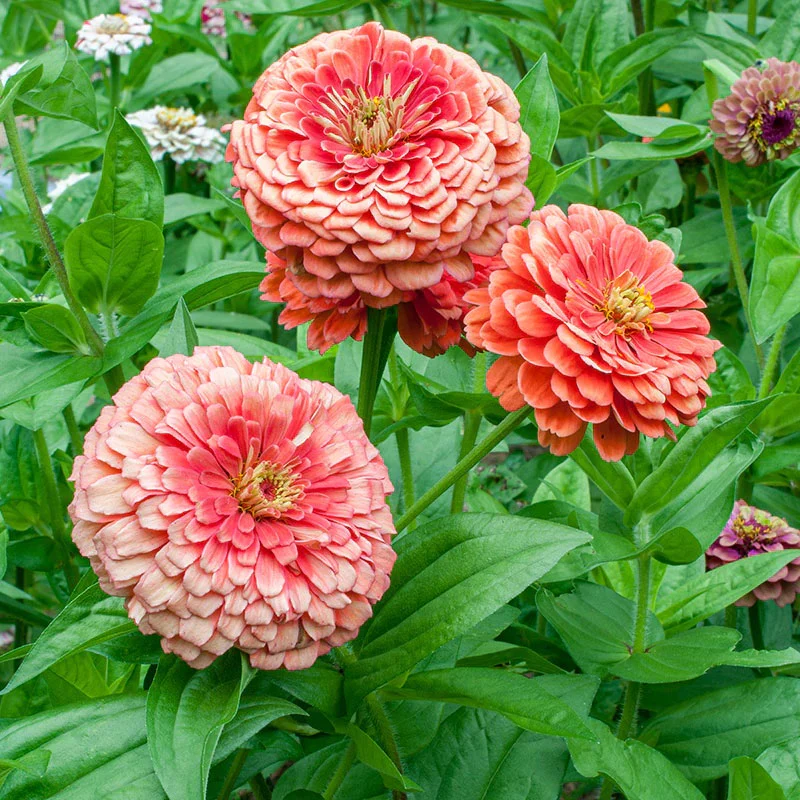
Fiora Lab Heirloom Scabiosa is an early-generation, open-pollinated zinnia selection line focused on raised, tufted, crested, cushion-like centers in soft heirloom-inspired colors. It is not a finished uniform variety. Variation is expected.
Grow the row. Mark the flowers with centers worth building around. Save the most complete plants for the main line. Keep rare but flawed center forms separate.