I went into the 2026 ranunculus season with a lot of hope, a very full spreadsheet, and a stack of production notes and research PDFs open beside me.This year, I focused on Italian Cloni ranunculus varieties across the Natura Moderna, PonPon, and Success lines. I tracked cultivar names, corm counts, corm sizes, presprouting dates, planting dates, locations, temperatures, sprouting dates, bloom results, and post-season plans.
After all of that, the clearest lesson was simple:Not everything that sprouts will bloom.Not everything that looks promising early in the season will finish strong.And not every expensive or specialty corm performs the way you expect it to.
This is my honest 2026 ranunculus grow report: what I planted, how I prepared the garden, what I changed along the way, which varieties actually bloomed, which varieties only made leaves, and which ones completely stalled.I want to be clear about the context of this trial. I am a backyard gardener in North Carolina, Zone 8. I do not grow with drip lines. I do not have a hoop house. I do not have a climate-controlled flower farm setup. These ranunculus were grown under ordinary backyard conditions, with the tools, limits, and weather realities of a home garden.
That matters because Italian Cloni ranunculus are often discussed like professional-grade material. They are beautiful, consistent, and expensive, but they are not automatically easy. Growing them without professional infrastructure created a real test between catalog expectation and backyard reality.
Before planting, I read several ranunculus production resources, including Utah State University’s cut flower production guide, Johnny’s ranunculus production sheet, and Michigan State University research on vernalization, temperature, and photoperiod. Those sources helped shape my thinking around corm size, cool-season timing, presprouting, soil moisture, temperature, and the limits of planting by calendar alone.
This project formally began on January 17, 2026, when I presprouted the first six of sixteen ranunculus cultivars planned for observation.
The project began with a simple question: what would happen if I approached a backyard flower bed the same way I approach professional work — slowly, deliberately, and with documentation from the start?The first time I held a ranunculus corm, it felt impossibly small for what it contained. Each one carried an entire seasonal trajectory inside it, waiting for the right conditions to align.
Rather than planting in mass, I treated each plant as an individual specimen.A roughly 3 × 20-foot section of my backyard was converted into a ranunculus-focused observation space. It was not designed for maximum yield or display. Walkways, spacing, airflow, and access were prioritized so that each plant could be observed, measured, and recorded independently.
The soil was amended but imperfect. The climate was variable. My experience with Italian Cloni ranunculus was limited. There were no drip lines, no hoop house, and no protected tunnel environment.Those constraints were not avoided. They became part of the trial.
Before planting, I had the advantage of starting with a blank slate.
This garden was new, which meant I had control over the starting soil composition instead of inheriting years of amendments, compaction, or unknown inputs. That shaped how I prepared the space for ranunculus and how I wanted it to function later in the season for pollinator flowers, dahlias, and mums.
The in-ground beds began with a simple base: approximately 50% native garden soil and 50% compost. This blend was intended to balance moisture retention with drainage.For ranunculus, I applied additional amendments locally instead of across the entire bed. Perlite and pine fines were incorporated at each planting position, and each spot was lightly mounded to elevate the corm above the surrounding soil line.
That decision came from the same theme repeated across the production resources I read: ranunculus need moisture, but they do not tolerate saturated conditions well. Utah State University specifically notes that ranunculus require moist soil that is allowed to dry between waterings and that excessive moisture, especially before sprouting, increases the risk of root, stem, and crown rots.
AirPot plantings followed a different logic. Their medium was a 50/50 blend of potting soil and perlite, creating a highly aerated environment with rapid drainage. These plantings were not meant to replicate in-ground conditions. They existed to isolate how ranunculus responded when root aeration and moisture control were prioritized.
This stage of the season was quiet but structural. Once planting began, many variables moved beyond my control. Soil preparation was one of the few moments where intention could still be expressed clearly.
Field note:
If you read enough ranunculus growing advice, most sources eventually point you toward fall planting.I understand why that advice exists. In climates with cool, stable winters and good drainage, fall planting gives ranunculus a long season to root, establish, and bloom before spring heat arrives. Utah State University recommends November planting for high tunnel production and either insulated fall planting or early spring planting for field production in Utah. Johnny’s also emphasizes that ranunculus should be planted in the season and structure that best provide a cool growing period.
But that is not my winter.I tested fall planting first with inexpensive ranunculus corms. I planted about 50 of them in the fall. Only three survived.That result changed how I approached the rest of this trial.
In eastern North Carolina, Zone 8, winter is not just cold. It is wet, humid, and unstable. The soil can stay saturated for long periods, then temperatures can drop suddenly. For ranunculus, that combination is hard. The problem is not only freezing. It is moisture, humidity, and freeze-thaw stress happening together.
That is why I moved toward winter planting instead of fall planting.
I wanted the corms active and rooted before spring warmth arrived, but I did not want them sitting in cold, wet ground for months.
The initial plan followed standard guidance: presprout under cool conditions, then plant out within a reasonable window.
The first corms were placed in an unheated office cabinet, where temperatures hovered near 55°F with roughly 50% humidity. At that point, planting by the end of January still seemed possible.Within days, weather became the deciding factor.
Extended forecasts showed repeated hard freezes and unstable temperature swings. Even with frost cloth, newly planted ranunculus would have been exposed to conditions unlikely to support survival. This was not a small risk. It was structural.Rather than forcing the timeline, I paused it.
The presprouted corms were moved into refrigerated storage, where temperatures stayed between 42°F and 44°F with lower ambient humidity. This more closely mimicked stable cold soil without the freeze-thaw cycles that dominate winter here.
To accommodate space constraints, corms were potted into individual 3-inch containers rather than 1020 trays. The pots were stacked vertically inside the refrigerator, with layers separated by paper grocery bags to buffer humidity and airflow.
This configuration allowed multiple cultivars — six at that stage, four corms each — to be held in a compact, stable environment without forcing premature planting.
That early adjustment clarified something fundamental: planting date could not be the organizing principle of this garden.
Conventional ranunculus guidance often emphasizes fall or early winter planting, but that advice assumes climates with stable cold and excellent drainage. Here, winter is wet, erratic, and punctuated by sudden freezes.
The cost of following the calendar instead of the environment would have been high, and likely terminal.The decision to refrigerate rather than plant was not a delay. It became the method forming itself.
My working goal had been to have all sixteen cultivars fully presprouted by January 31. Not because they would be planted then, but because ranunculus has a narrow bloom window once spring temperatures rise. Both Utah State and Johnny’s emphasize that ranunculus are cool-season flowers and that persistent warmth shuts down productivity.
Presprouting preserved bloom potential while deferring exposure to conditions the plants could not survive.
By February 10, 2026, the pattern had clarified.
Winter in Princeton had not resolved into a stable cold period. Instead, it continued to oscillate — warm afternoons followed by freezing nights, rain punctuated by dry wind, and forecasts shifting daily.At that point, uncertainty itself became the most reliable signal.This was when I restarted presprouting for the remaining ten ranunculus cultivars planned for observation.
The delay was intentional.Presprouting is not a goal in itself. It is a bridge between dormancy and planting. For that bridge to function, the far side has to exist. In January, it did not.
By mid-February, the equation had shifted. Freezing temperatures were still possible, but the likelihood of prolonged hard freezes had started to decline. Day length was increasing. Soil temperatures were trending upward rather than cycling wildly. The window between presprouting and planting became shorter and more predictable.
This restart reflected one of the clearest conclusions of the season: in eastern North Carolina, timing has to be responsive, not aspirational.
Unlike the first group, which relied on refrigerated holding, this phase used a method selected for scalability.The remaining cultivars were presprouted at approximately 55°F in an unheated office cabinet, with ambient humidity around 50%. This method is accessible to most home growers and does not require specialized equipment.
Corms were hydrated briefly, then placed into individual 3-inch pots with a lightly moistened, free-draining medium. Pots were labeled by cultivar and track assignment and spaced to allow airflow. No bottom heat was used.
The goal was root initiation, not top growth.Any visible shoot development before planting was documented as an outcome, not encouraged as a success.
One of the clearest constraints from January was scale. Refrigerated presprouting worked for a limited number of plants, but it was not realistic for dozens of pots over multiple weeks in a regular household refrigerator. A method that cannot be repeated at full backyard scale should not become the baseline.
By restarting presprouting in mid-February, when planting was expected within 7 to 14 days, storage duration was minimized. This reduced the risk of etiolation, desiccation, or premature growth while remaining compatible with household limitations.
Field note:
Date: February 10, 2026
Action: presprouting restart for remaining cultivars
Method: cabinet presprouting at approximately 55°F
Duration target: 7 to 14 days before planting
Focus: root initiation, establishment timing, method reproducibility
Status: presprouting in progress
On February 17, 2026, I planted the first presprouted Italian Cloni ranunculus that had been initiated on January 17 and held under refrigeration.
This planting happened after an extended delay, not because of indecision, but because of environmental constraint.For several weeks, outdoor conditions moved between warm spells, freezing nights, and saturated soil. During that time, the presprouted corms were maintained in cold storage to preserve viability without forcing growth.
By mid-February, the pattern shifted enough to permit a limited release.Soil conditions were still cold but workable. Overnight freezes were still possible, but extended hard freezes were no longer dominant in the forecast. Moisture levels had receded enough to avoid collapse at planting depth.
This window was narrow, but it was stable enough to support continued root development.
The corms planted that day showed evidence of prolonged cold holding. Roots were present on most specimens — compact and pale, with minimal elongation beyond the corm body. Top growth varied. Some corms showed no visible shoots. Others had initiated short, restrained growth. None were etiolated. No rot or structural collapse was observed at planting.
Planting was limited to prepared in-ground beds and selected AirPot containers. Soil preparation, planting depth, and amendment strategy followed the established protocol. Corms were oriented crown-up where identifiable and firmed in gently.
Frost cloth remained available to buffer short-duration freezes during acclimation.This planting was intentionally partial. Additional corms remained in storage, preserving both a point of comparison and flexibility.
Field note:
Date: February 17, 2026
Action: planting of refrigerated presprouted ranunculus initiated January 17
Tracks planted: in-ground and AirPot
Soil condition: cold, workable, draining
Protection: frost cloth staged for light freezes
Focus: transition from cold hold to soil, early root continuity
Status: partial planting completed
On March 1, 2026, planting continued because conditions were finally acceptable.Not ideal. Acceptable.
After weeks of monitoring temperature patterns, soil moisture, and extended forecasts, this was the first point where presprouted ranunculus could be moved from controlled conditions into the ground without immediate exposure to destabilizing cold.
The soil remained cool. Night freezes were still possible. But the pattern had shifted from volatility toward trend.Soil temperature at planting depth remained in the low 40s. Beds were workable but not dry, holding moisture from recent rain without pooling or collapse. Daytime air temperatures were mild, with overnight lows forecast near freezing rather than sharply below it.
These conditions were not gentle, but they were stable enough to allow root systems to continue developing rather than repeatedly resetting.Frost cloth remained staged nearby. Its role was no longer protection from deep winter cold, but buffering young plants during short-duration freezes as they acclimated.
The presprouted corms planted that day showed clear signs of readiness. Roots were present on most specimens — short, pale, and extending just beyond the corm body. Top growth varied by cultivar and corm size. Some corms showed no visible shoots. Others had initiated compact growth. None were elongated. None showed signs of decay or collapse.
This unevenness was expected. It reflected differences in corm size, storage history, and cultivar rhythm rather than handling error.
Each plant remained an individual record.In-ground beds received the next group. Each planting position was lightly mounded, with localized amendments of perlite and pine fines already incorporated. Corms were placed at consistent depth and oriented crown-up where identifiable.
AirPot plantings followed. Their 50/50 potting soil and perlite medium drained rapidly even after irrigation. Containers were positioned to receive full sun while remaining movable if late cold required temporary shelter.Cultivars were not distributed evenly across environments. Placement reflected presprouting readiness and availability rather than symmetry. That asymmetry was documented, not corrected.
A portion of each cultivar remained unplanted and in storage. These corms served as both reserve material and comparison points.
Field note:
Date: March 1, 2026
Action: planting of presprouted ranunculus
Soil temperature: low 40s
Tracks planted: in-ground and AirPot
Protection: frost cloth staged for light freezes
Focus: establishment, early root continuity, environmental response
Status: planting initiated
For this trial, I tracked close to 100 plant entries, although the usable total was adjusted because some corms were missing, duplicated, broken, or replaced.
The Italian Cloni ranunculus varieties included:
I also had earlier inexpensive mixed ranunculus and Tecolote ranunculus plantings that helped inform the fall-planting decision, but the main 2026 specialty trial focused on Italian Cloni material.
Some corms were planted in-ground. Some were planted in AirPots. Some were stored for fall. Some were presprouted first. Some were planted later as replacements.Most of the corms were presprouted in January and February 2026. Some were held around 45°F to 50°F. Others were started at 55°F for the first few days, then moved to refrigeration around 42°F to 45°F.
A large portion of the corms went into the ground around mid-February through March 1. Replacement corms were planted later, around March 13, 2026.
The most common sprouting date I recorded was April 11, 2026.That date showed up again and again in the notes. Many corms finally broke through around the same time, but only a small group turned that sprouting into actual bloom production.
Out of all the Italian Cloni ranunculus varieties I planted, these were the only ones that bloomed:
These were the standouts from the entire planting. They made it past the sprouting stage and actually produced flowers.That matters because many of the other corms sprouted or started to show life, but they never made it to the finish line.
Two varieties gave me leaves but no real bloom performance:
These were especially frustrating because they were not complete failures. They sprouted, grew foliage, and looked like they might keep going.
But they never gave me the flowers I was hoping for.This is one of the harder parts of growing ranunculus. A sprout feels like a win in the beginning. But sprouting is only the first checkpoint. Blooming is the real test.
The rest of the varieties either did not sprout well, stalled after sprouting, or never produced usable blooms.That included several corms from the PonPon, Success, Natura Moderna, and Cloni groups.
Even with different tracks, planting windows, and presprouting methods, the result was still the same for many of them: they stalled.
This is where Fiora Lab seed should eventually become hard to ignore.The seed will not come from every flower.It will come from plants that made it through selection.A weak plant with one perfect bloom is still a weak plant.
A strong, productive plant with good color, usable form, and better health may be far more valuable.
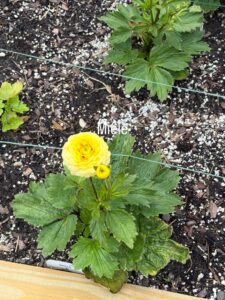
Cosmo performed well compared with many of the other specialty varieties. Most of the planted corms sprouted, and this variety made it into the bloom group.
This was one of the Natura Moderna varieties that gave me enough confidence to consider growing it again.
Miele also performed better than expected. Several planted corms sprouted, and it made the final list of varieties that bloomed.
Compared with Venus, which completely stalled, Miele was the stronger Natura Moderna choice in this trial.

Tuareg was another strong performer. Even though there were notes about receiving fewer corms than expected, the corms that were planted did well.
This variety sprouted reliably and made it to bloom.
Honey was not perfect, but it performed well enough to stay on the success list. Some corms sprouted, some did not, but the variety still produced blooms.
For a backyard trial like this, I do not expect every single corm to be perfect. I am looking for varieties that prove they can finish.Honey did that.
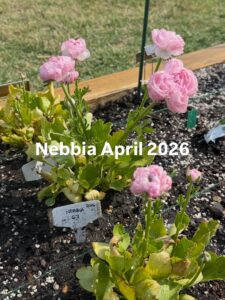
Nebbia was one of the most consistent varieties in the whole group. Multiple corms sprouted, and it made the bloom list.
This is the kind of variety that is helpful in a real garden trial because it gives you data you can trust. When many other cultivars are stalling, the reliable ones stand out quickly.
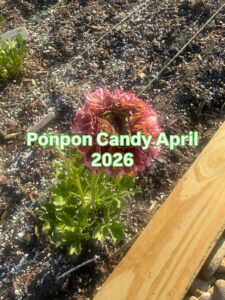
PonPon Candy was the strongest PonPon variety in this trial. It sprouted well and made it to bloom.
This was especially important because several other PonPon varieties did poorly. Candy separated itself from the group.
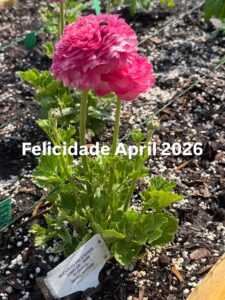
Felicidade was another variety that performed well. Even with some corm count issues, the planted corms sprouted and bloomed.
This one earned a place on the “worth considering again” list.
Venus was one of the biggest disappointments.Every recorded Venus corm was marked as did not sprout or stalled. Since Cosmo and Miele both performed better, Venus stood out as the weaker Natura Moderna variety in this trial.
It may have been the corm quality. It may have been timing. It may have been the conditions. But based on this year’s results, Venus did not earn garden space again.
Hermione also failed to perform. The corms were presprouted and planted, but they did not produce the result I wanted.
This one was disappointing because PonPon varieties are usually exciting on paper. The flower form is beautiful, but in this trial, Hermione did not get there.
Igloo was probably the most frustrating variety.Some corms arrived in pieces. Some broke into multiple pieces. Several were planted as smaller divisions. Most did not sprout or stalled.
Because of the condition of the planting material, I do not know if this was a fair test of Igloo as a cultivar. But as a purchase and grow experience, it was not a good one.
Minerva XL had large corms, which made the poor result more disappointing.Larger corms usually make me feel more confident going into planting, and the production resources I read supported that instinct. Utah State notes that larger ranunculus tuberous roots, often 5–7 cm, are directly linked to yield.
But size alone did not save this variety. The recorded corms did not perform well enough to make the bloom list.
Success Blush was another poor performer. Several corms were planted, including one that split during presprouting, but the variety did not bloom.
Since other Success varieties performed much better, Blush was clearly not one of the winners this season.
Grand Pastel also stalled. The corms were presprouted, planted, and tracked, but they did not produce blooms.This one goes on the “beautiful in theory, disappointing in practice” list for this year.
The replacement corms were planted later, around mid-March.Cloni Success Nuance and Cloni Success Favola did not sprout well, and my note was simple: possibly too late planting.
That is a real possibility. Ranunculus can be very timing-sensitive, especially when the weather warms up. By the time these went in, they may not have had enough cool growing time to establish properly.
Planting after early March means asking the plant to root, establish, and initiate flowering almost simultaneously. In this climate, that may be a structural mismatch.
Based on this trial, I would prioritize these varieties again:
I would also keep watching Success Nerone and Cloni PonPon Magic, but only with caution. They sprouted and produced leaves, but they did not bloom this time.
They may deserve one more trial under better timing or different conditions, but I would not give them prime space yet.
Some of these may perform better in another climate or with different corm quality. But in my garden, with this planting schedule and backyard setup, they did not earn their space.
One of the most important phases of this project happens after flowering has finished.Corms are often discussed only up to bloom, but decline, dormancy, and post-season decisions reveal just as much about a cultivar’s long-term behavior. This project treats the end of the season as a continuation of observation rather than a conclusion.
Because the main trial focused on Italian Cloni ranunculus, I am handling these differently than ordinary non-patented ranunculus.Protected Cloni cultivars are not being lifted for reuse in the same way I would handle non-patented material. Instead, they are observed through late spring and summer conditions. In-ground plants are mounded and monitored for drainage, while shade cloth is used selectively to reduce heat and rain stress. AirPot plantings rely on rapid drainage to prevent saturation.
For non-patented ranunculus outside this trial, my approach would be finite and deliberate. After flowering, corms may be lifted and stored. Mother corms would be followed for a maximum of three seasons before being discarded. Daughter corms smaller than approximately 2 cm would be discarded. Larger daughter corms could be replanted and observed under the same rules.
This creates a closed observation loop: growth, evaluation, repetition, and conclusion.
This phase of the season is quieter than bloom, but often more instructive. It reveals which plants exhaust themselves, which persist, and which leave behind material worth studying again.
Field note:
Focus: post-season behavior and longevity
Tracks: in-ground, AirPot, stored
Status: lifecycle monitoring
Those are not the same thing.At first, I wanted to count sprouting as success. But after watching the season unfold, I realized that sprouting is only the beginning. A variety that sprouts but never blooms still takes up space, water, time, and attention.
For future tracking, I would label each variety in stages:
The second major lesson is that general gardening advice has to be filtered through local reality.Fall planting may work beautifully somewhere else. In my wet, humid Zone 8 garden, it failed almost completely. I planted about 50 inexpensive ranunculus corms in fall, and only three survived. That experience made it clear that my winter conditions are not just cold. They are wet, humid, and unstable.
The third lesson is that presprouting gives me the best control as a backyard gardener.There is a lot of conflicting advice about ranunculus presprouting. Some sources recommend cool storage, some recommend trays, some recommend peat or vermiculite, and some emphasize moisture control. Utah State reports that presprouting for two weeks advanced bloom by about one week and improved marketable yield in its trials, while Johnny’s describes chilling and sprouting as separate cool-temperature stages that can be done in trays or containers.
After this trial, my preferred method is more straightforward.I would soak the corms in cold water for about three hours, changing the water every hour if possible. For the final 10 minutes, I would use a diluted fungicide solution. Then I would plant the corms into germination mix, using the same seed-starting system I use elsewhere in the garden.Instead of trying to hold loose corms in the refrigerator or guessing how dry a bag of medium should be, I prefer placing them into 50-cell trays and letting them initiate roots there.
Once roots form, I keep them in the trays.This gives me a visible checkpoint. I am not guessing whether the corms are waking up. I can actually see root development before committing them to the garden.
The fourth lesson is that trays are more practical than permanent early planting in my setup.Because I do not have drip lines or a hoop house, portability matters. I would start bringing presprouted trays outside about four to six weeks before the last frost. The trays can acclimate outdoors during cool, non-freezing weather. If freezing temperatures are forecast, I can move them into the garage temporarily.
That approach gives the plants cool conditions without forcing them into saturated winter ground too early.The fifth lesson is that corm size matters.Going forward, I would prioritize buying only 5/7 corms whenever possible. Smaller corms can grow, but this trial made it clear that starting material matters. Larger, stronger corms give the plant a better reserve of energy and improve the odds of making it all the way from presprouting to bloom.
The sixth lesson came from the Michigan State research: cool treatment and photoperiod can influence timing, but faster is not always better. Their trial found that vernalization hastened visible bud and harvest in the cultivars tested, but immediate forcing under a 16-hour photoperiod could reduce stem length and yield; the researchers recommended vegetative growth under short days before using longer days to hasten flowering.
That matters for a backyard grower because it reinforces what I saw in my own trial: bloom timing is not just about getting plants started. It is about giving them enough cool, stable growing time to build strength before asking them to flower.For me, the best method is no longer fall planting just because the general advice says so.
It is controlled presprouting, visible root formation, gradual outdoor acclimation, and planting based on actual local conditions.In my garden, that gives Italian Cloni ranunculus the best chance.
This season reminded me that specialty ranunculus growing is not always as pretty as the photos make it look.There is a big difference between buying beautiful cultivars and actually getting those cultivars to bloom in your own garden.
The catalog photo is the dream.The spreadsheet is the truth.For 2026, my best bloomers were Hanoi, Cosmo, Miele, Tuareg, Honey, Nebbia, Candy, and Felicidade. Nerone and Magic gave me leaves only. The rest stalled.
That may sound disappointing, but it is also useful.Now I know which varieties are worth repeating, which ones may deserve a cautious second trial, and which ones are not getting the best garden space next season.
I also know that I will not blindly follow fall-planting advice just because it appears in general gardening guidance. In my garden, with wet and humid Zone 8 winters, fall planting was not the best method. Presprouting in trays, watching for root formation, acclimating plants outside before the last frost, and protecting them only when freezing weather arrives gave me more control and better information.Going forward, I will prioritize strong 5/7 corms, visible root development, and planting decisions based on actual conditions rather than a calendar.
For me, that is the real value of tracking. Even a disappointing season can become a helpful one when you write everything down.This garden exists as a journal, not a storefront.A record, not a promise.